
The Easter Egg That Wasn’t
Along the Way

I love Easter eggs.
I don’t mean the plastic kind you hide in the yard. The other kind. The hidden detail a filmmaker tucks into a scene; the background gag only devoted fans catch. I love noticing them. When I miss one, I love reading about it afterward. I feel a small retroactive delight.
There’s something about that experience that’s ... exciting, I guess. The idea that the person who made the thing cared enough to hide something for you. That meaning runs deeper than the surface. That paying attention is rewarded.
So you can imagine why a particular piece of supposed biblical trivia caught my attention years ago.
The story goes like this:
In the ancient Near East, when a master had finished a meal, the way he communicated with his servants was through the napkin. If he crumpled it and tossed it on the table, the meal was over. Clear the dishes, you’re done. But if he folded it neatly and set it beside his plate, it meant something else entirely.
I’m coming back. Don’t touch anything.
Now read John 20 with that in mind. Mary finds the tomb empty and runs to get Peter and John. They race to the tomb. Peter goes in first and sees the burial cloths lying there. And then, right there in verse 7, a specific detail that John apparently felt was worth including: the face cloth that had been on Jesus’ head was not lying with the other cloths.
It was folded up. Set apart. In a place by itself.
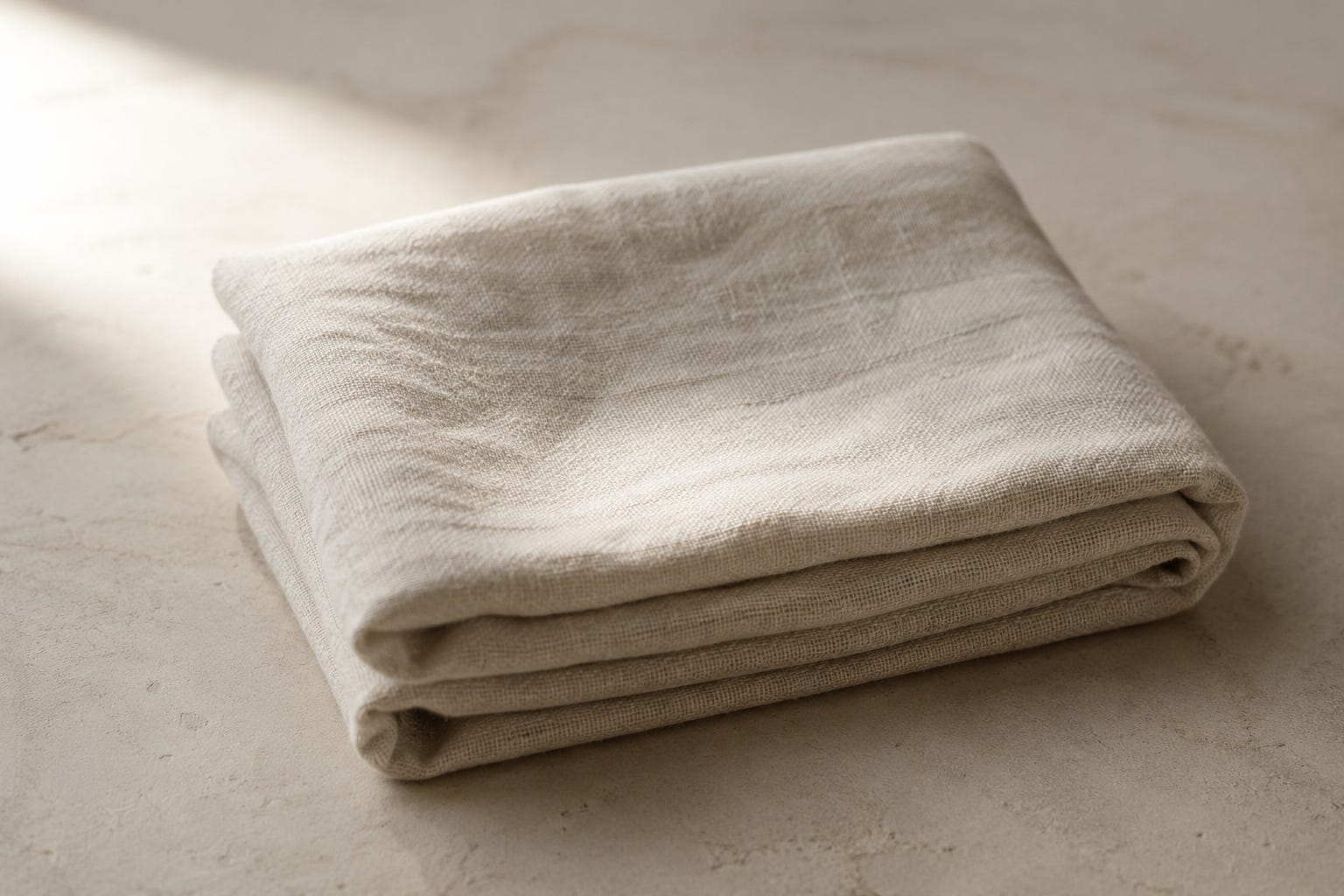
It feels so much like an Easter egg, hidden in plain sight. A signal to anyone paying close enough attention. I’m coming back.
I loved this. I told it more than once.
But there turned out to be a problem.
When I decided to look into it, I couldn’t find historical evidence for the folded napkin custom. I couldn’t find an ancient source or a scholar to verify it. The story circulates widely through sermons and devotional literature. It has the feel of something that must be true. But when you chase it back to its origin, you find ... nothing.
It’s an illustration someone invented, or embellished, or simply passed along because it felt right. And it spread the way things spread when they confirm what people already want to believe.
Which left me alone with the actual text. And the actual text has always annoyed me.
The cloth doesn’t do anything.
There are conventional explanations. It was orderly, unhurried, proof it wasn’t grave robbers. Those just don’t quite land for me. They feel like we’re working too hard to assign the detail a job. To make it useful. To justify its presence in the story by giving it something to accomplish.
But John just mentions it. And moves on. There is no angel that explains it. No disciple comments on it. Jesus says nothing about it when he appears later in the chapter. The detail just sits there, slightly apart, the way the cloth itself apparently was. Then Peter and John go home. Still not fully understanding. Carrying something they couldn’t yet name back into an already odd morning.
So that got me wondering about a different possibility.
What if the cloth doesn’t need to do anything?
What if it’s just ... there. A small, inexplicable thing, folded and set aside with what feels like care. Maybe its not a signal or a proof. Not an Easter egg with a hidden meaning waiting to be decoded. Just something that happened, and was noticed, and was worth mentioning even without an explanation attached.
I’ve been thinking about this alongside something I’m working on in myself. I am finding it genuinely hard, harder than I want to admit, to believe that I am valued simply for existing. Not for what I produce or for what I explain or build or accomplish or make meaningful. Just for being here.
Old habits run deep. I am much more comfortable when I can point to something I’ve done.
Maybe that’s why the folded cloth has always nagged at me. It resists that. It refuses to be useful on my terms. It just sits there, folded, set gently apart. It doesn’t accomplish or prove anything. It doesn’t try to earn its place in the story.
And yet John thought it was worth including.
I’ve also wondered lately whether God is more playful than I’ve given him credit for. Maybe He smiles a little when we construct elaborate meanings around things that are simply there. Not mocking — nothing like that. More like the warmth of watching someone you love work very hard to find the hidden message in something you left out of pure affection, with no other message intended.
I just folded it. I just set it there. That was enough.
Maybe the cloth is a small, gentle thing. A reminder that not everything has to earn its place. That some things are simply present, simply tended, simply set apart. And that is already sufficient.
I am working hard to believe that is also true of me.
It is slow going. But I think I’m getting somewhere.
Hmmm 🤔 I brings up for me what other parts of scripture do I want (maybe need) to have explained that really doesn’t need an explanation - it just is. I will definitely ponder this. And to see myself as valued and valuable just because I am - not simply for what I do. Contemplating the value of human life - all human life, including my own. God so loved the world (human beings) that He gave His only Son Jesus… there is no distinction of human life- no selection process, no evaluation of who is more valuable just a declaration that God loves - and out of that love He gave.
Thanks for sharing Phil.
Oh boy, talk about thought provoking! I'm not sure I know anyone who totally sees themselves as valuable just because they exist. I know God loves me for who I am, but that's not the same as seeing myself as being valuable just because I exist. Once again, you've shown me that I have a lot of work to do on seeing myself as God sees me. Thank you Phil for your enlightening messages that open our minds to new thoughts so that we have a better understanding of ourselves and our relationship with God.